A piece of commercial land can look great on paper.
Good location.
Right zoning.
Strong demographics.
Plenty of acreage.
But none of those automatically mean the proposed project will be economical to build.
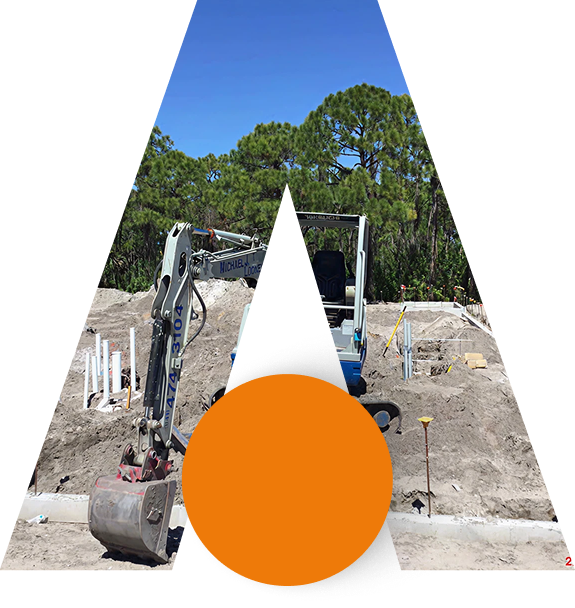
One of the most important lessons we’ve learned through commercial construction is that what happens below, around and outside the building can have as much impact on the construction budget as the building itself.
That’s why involving a commercial contractor during site evaluation can give developers another valuable perspective before major decisions are made.
The Cost of Commercial Land Isn’t Just the Purchase Price
The purchase price is only one part of the development equation.
Turning raw or previously developed land into a construction-ready site can require significant work.
Depending on the property, construction considerations may include:
- Earthwork and grading
- Unsuitable soils
- Building pad preparation
- Stormwater management
- Utility availability and extensions
- Water and sewer capacity
- Off-site improvements
- Retaining walls
- Existing structure demolition
- Construction access
- Material staging
- Environmental or site constraints
- Phased construction requirements
These conditions can significantly affect commercial site-development costs and ultimately influence whether the project works financially.
Bring Construction Into Commercial Due Diligence
A general contractor shouldn’t replace the professionals already involved in due diligence.
Quite the opposite.
Commercial development works best when the owner has the appropriate expertise around the table.
The land-use attorney evaluates entitlement and regulatory issues.
The civil engineer determines how the property can be developed.
The architect evaluates the building program and design.
The broker brings market and real-estate expertise.
The lender evaluates financing.
And the contractor contributes a construction perspective.
Our question is:
What is it actually going to take to build this project?
Develop a Conceptual Construction Budget Early
An owner doesn’t need completed construction drawings to begin understanding potential construction costs.
A conceptual construction budget can use the information available at that stage—site plan, building size, proposed use, structural system, preliminary design and known site conditions—to establish an early financial framework.
A conceptual budget isn’t a final construction proposal.
It shouldn’t pretend to be.
Its value is helping developers make better decisions while the project is still evolving.
As design progresses and more information becomes available, the construction budget can become increasingly detailed.
Understand the Schedule Before Making Commitments
Feasibility isn’t only about cost.
Time matters.
Permitting, utilities, long-lead equipment, structural systems, procurement and site conditions can all affect when a project can realistically begin and how long construction may take.
For an owner carrying land, financing and development costs, schedule can directly affect the economics of the project.
An early commercial construction schedule gives the development team another piece of information to incorporate into the overall business plan.
Sometimes the Right Answer Is to Change the Project
Early construction involvement isn’t about convincing an owner to build.
It’s about providing useful information.
Sometimes our analysis confirms the direction.
Sometimes it identifies an opportunity to modify the building, site plan, construction system or schedule.
And occasionally, it raises a concern that deserves further investigation before the owner commits additional capital.
All of those are good outcomes if they’re discovered early.
The purpose of due diligence is to make informed decisions.
Construction should be part of that conversation.
Evaluating Commercial Property or Planning a Development?
Atlas Building Company works with commercial developers, property owners, architects, engineers and real-estate professionals during the earliest stages of development.
Our preconstruction team can assist with conceptual budgeting, preliminary scheduling, constructability and construction feasibility before a project reaches final design.
If you’re evaluating commercial land in Florida or the Southeast, contact Atlas Building Company and bring a construction perspective into the conversation early.